Blog

  • The Ultimate Buyer’s Guide for Transitioning to Fractional CMO Services

    The Ultimate Buyer’s Guide for Transitioning to Fractional CMO Services

    The Ultimate Buyer’s Guide for Transitioning to Fractional CMO Services written by John Jantsch read more at Duct Tape Marketing

    Table of Contents Introduction Understanding the Fractional CMO Model Top Fractional CMO Training Providers Program Comparison Table Framework Comparisons The 4 CMO Models Decision-Making Tips Implementation Essentials Making the Final Decision Conclusion Additional Resources Introduction: The Growing Fractional CMO Landscape The fractional CMO model offers high-level marketing strategy without the cost of a full-time hire. […]

    The AI Driven Leader: How to Think Strategically and Make Smarter Decisions with AI written by John Jantsch read more at Duct Tape Marketing

    Listen to the full episode:

    Geoff Woods on the DTM PodcastEpisode Summary

    In this episode of the Duct Tape Marketing Podcast, host John Jantsch welcomes Geoff Woods, founder of AI Leadership and author of the international bestseller The AI Driven Leader: Harnessing AI to Make Faster Decisions. Geoff shares how leaders can use AI not just to automate tasks—but to enhance strategic thinking, speed up decision-making, and escape operational overwhelm.

    Through frameworks like CRIT (Context, Role, Interview, Task) and real-world use cases, Geoff reframes AI as a high-level thought partner rather than a basic productivity tool. The discussion explores how leaders can remain relevant, sharpen their judgment, and bring out the best in their teams by embracing AI as a strategic amplifier—not a threat.

    About Geoff Woods

    Geoff Woods is the founder of AI Leadership and the AI Driven Leadership Collective, where he helps C-suite leaders and growth-minded executives navigate the AI revolution. Formerly Chief Growth Officer at Jinda

  • Boost your co-working space with social hours

    Boost your co-working space with social hours

    When I visited Caldwell, Kansas, the manager of the co-working site said they had filled their private offices, but struggled to attract day users. People who work from home like working from home. They don’t want a full time office, so they said they don’t want to use the coworking space. How can the coworking […]

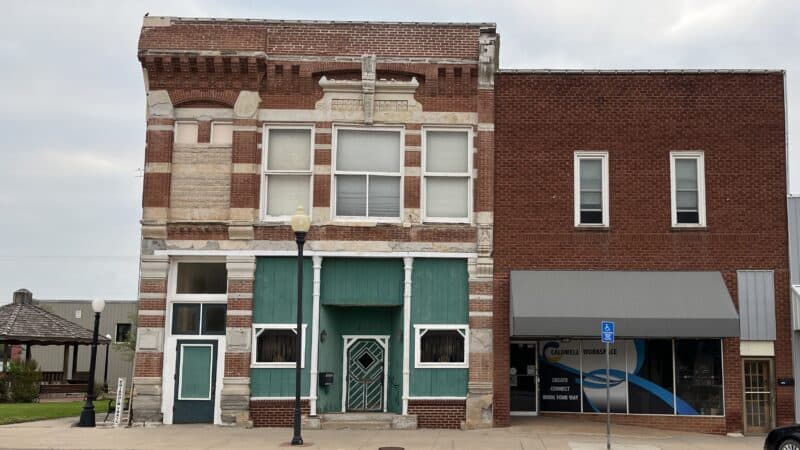
    A plain brick building in a small downtown has a window decal that says “Caldwell Workspace: create, connect, work your way” Next door is an ornate brick building from the late 1800s.

    The Caldwell Workspace is on the right. Photo by Becky McCray.

    When I visited Caldwell, Kansas, the manager of the co-working site said they had filled their private offices, but struggled to attract day users.

    People who work from home like working from home. They don’t want a full time office, so they said they don’t want to use the coworking space.

    How can the coworking space attract those work-from-home folks?

    Promote the “co” part more than the “working” part.

    At their best, co-working spaces are human spaces, Emergent Research has been saying for ten years now. Studies found that people who use co-working say it makes them less lonely. That’s the part to talk about, much more than the fact that you can work there.

    Start by providing your work-from-home people with social hours and temporary events so they can connect and build community with each other. That will help their wellbeing right away. Plus, as long as they’re in the space, they’ll look around and found out more about the space and the services it offers.

    Social hours also give you (the manager of the space) a chance to ask more about what they do, what they want and need. Do they want day time hangout events? Are they eager to be social? Do they really just need a copier? I don’t know, but they’ll tell you when you get them together to Build Connections

  • You don’t have 52 weeks this year

    You don’t have 52 weeks this year

    By Rob Hatch Thirty-six weeks. Part of my process for planning my business for the New Year is to do a little reality check on exactly how much time I have to work with. What are you talking about, Rob? You have a year. Technically, that’s true. However, on closer inspection, I only have 36 […]

    By Rob Hatch

    A very busy, full planner with many notes, highlights and scribbles.

    Thirty-six weeks.

    Part of my process for planning my business for the New Year is to do a little reality check on exactly how much time I have to work with.

    What are you talking about, Rob? You have a year.

    Technically, that’s true. However, on closer inspection, I only have 36 FULL weeks available.

    36 is the new 52

    My process is pretty simple. I set up a spreadsheet listing every week in 2025. Right off the bat, you’ll notice that the first whole week begins on January 6th.

    Next, I block off the weeks when I know I will be on vacation and spending time with friends and family.

    Then, I note each week a holiday or personal event occurs that will limit the time I have available for work.

    I noted weeks when my children are on school break, and I want a lighter work schedule.

    I look at the seasonal ebbs and flows of our family life, such as when we begin and end the school year.

    Taking all that into account, I was left with 36 full weeks.

    Thirty-six weeks is a very different number to work with than fifty-two.

    Here’s what I found most helpful about this exercise.

    1. I am starting my annual planning by prioritizing time with my family. I am deciding ahead of time to set aside significant time for that.

    2. Many of the other weeks (holidays, school vacation, weeks of transition) will happen regardless. By planning for them, I can plan around them.

    3. As I look at what I want to accomplish next year, I have a clear picture of the time resources available to commit to achieving them.

    Thirty-six full weeks.

    Your number will likely be dif

  • TREND 2025: Retail’s Big Split: what small town retailers can do now

    TREND 2025: Retail’s Big Split: what small town retailers can do now

    Remember the Retail Apocalypse around 2017? In a media interview this week, I brought up that it was actually Retail’s Big Split, not an apocalypse, and it’s ongoing. The reporter asked me to explain, so here’s my update for today’s retail landscape.   “Everything gigantic in American life is about to get smaller or die.” […]

    Remember the Retail Apocalypse around 2017? In a media interview this week, I brought up that it was actually Retail’s Big Split, not an apocalypse, and it’s ongoing. The reporter asked me to explain, so here’s my update for today’s retail landscape.

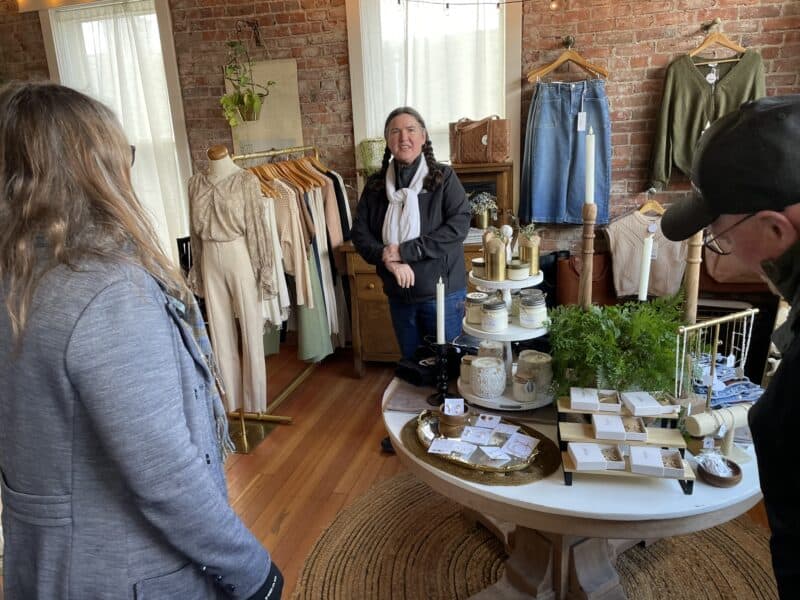
    A few people shopping in an attractive retail store in a former railroad depot.

    This combination business offers tiny spaces to retail pop-ups along with coffee and sweet treats. It offers plenty of meaningful, interesting purchases in this historic building in Potlatch, Idaho. Photo by Ana Blaisdell.


    “Everything gigantic in American life is about to get smaller or die.” James Kunstler wrote in 2013. He said big box retailers were on the brink of scale implosion, and that “every element of economic reality is now poised to squash them.” It was a provocative stance for 2013, and I’ve been monitoring small retail trends at least as long.

    By 2017, it seemed like we went over the brink. Every week brought another story of big retail jobs lost, the shuttering of stores, and the financial losses at big retailers.

    You might think small retailers, especially small town retailers, don’t stand a chance. But that’s not true. 

  • Survey of Rural Challenges 2015 – 2025 results

    Survey of Rural Challenges 2015 – 2025 results

    Download the PDF report Executive Summary The Survey of Rural Challenges asks rural people to share their ground-level insight into the challenges they face and the assets they can use. This report analyzes over 2200 responses from communities across the US and Canada from 2015 to 2024. The responses show what’s changing and what isn’t […]

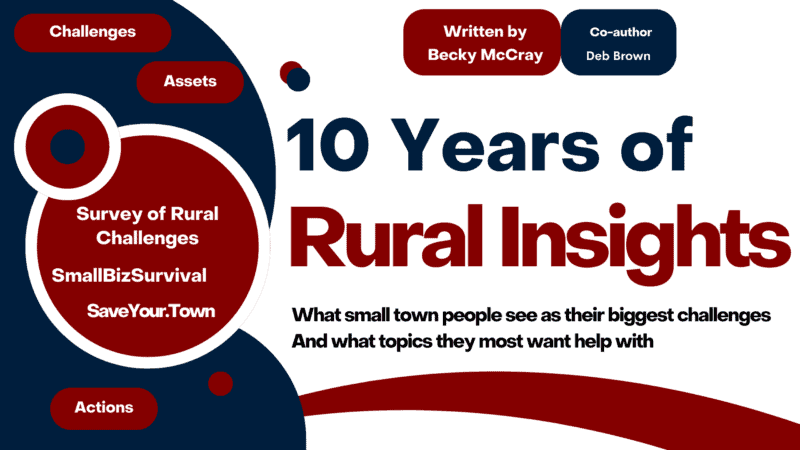
    10 Years of Rural Insights. What small town people see as their biggest challenges and what topics they most want help with. Survey of Rural Challenges, report written by Becky McCray and Deb Brown. Challenges, assets, actions

    Download the PDF report

    Executive Summary

    The Survey of Rural Challenges asks rural people to share their ground-level insight into the challenges they face and the assets they can use. This report analyzes over 2200 responses from communities across the US and Canada from 2015 to 2024. The responses show what’s changing and what isn’t in small towns and rural places from the point of view of their own people. 

    • Persistent challenges: Youth out-migration, downtown decline, workforce shortages and struggles with local business marketing continue to challenge rural communities. 
    • Fast-moving concerns: The housing crisis, lack of adequate childcare and lack of support for small businesses have increased as significant rural challenges in recent years.
    • Slow-building challenges: Over time, the lack of volunteers, the pressure from online competition on local businesses, and the lack of usable commercial buildings have risen to greater importance. 
    • Appreciating assets: The strength of rural communities to address their challenges comes from significant assets, including natural resource
  • How to let customers know when changing your business hours

    How to let customers know when changing your business hours

    Post extensively on social channels, and pin your hours post to the top of your page Your small business has times when you need to change your hours either for holidays, staff issues or (my favorite) extending into evening hours. How do you retrain your customers so they notice the change? Let’s look at a […]

    Post extensively on social channels, and pin your hours post to the top of your page

    Your small business has times when you need to change your hours either for holidays, staff issues or (my favorite) extending into evening hours. How do you retrain your customers so they notice the change?

    Let’s look at a real-world example from our friend in Boise, Idaho, (I know, kind of a big town) Kathleen Minogue.

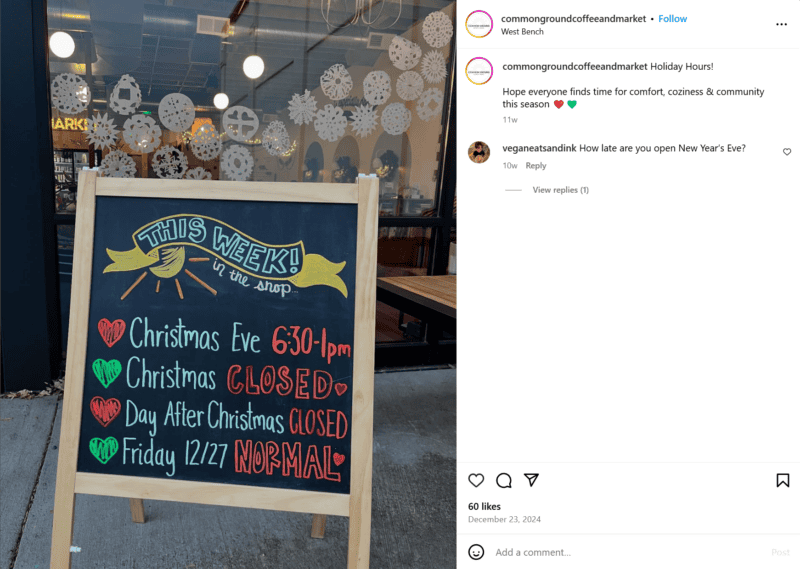
    “My local coffee shop just extended their Monday hours, and I will get heading there this afternoon,” Kathleen said. “They did a whole video about it on the socials to tell us and have pinned their hours to the top of their page.”

    Screenshot of an instagram post with Christmas week business hours. One comment asks, "How late are you open new year's eve?"

    Post your temporary hours on your favored social channels, and pin them for as long as they are current. Image from Common Ground Coffee and Market, Boise, Idaho, Instagram.

    If your website is hard to update

    If your website is not easy to change, use it to let people know what social channel is your main tool for quick updates.

    Post your most usual hours on your hard-to-change site, then say, “For current hours, follow us on…” and then give the social link.

    Kathleen said her colleague Scott Madsen was the one who suggested pinning the posts for visibility.

    “It’s a quick and responsive way that keeps their customers in the know and can be pinned so easily for all followers to see when they visit their profile,” Scott said.

    Crowdfunding? Crowdfund B

  • Hands-on and experience-based businesses boost local economies

    Hands-on and experience-based businesses boost local economies

    Guest post by Jason Duff, founder of Small Nation Ever wanted to pour your own candle? Now you can right here in Downtown Bellefontaine! Triple Moon Designs in Bellefontaine, Ohio, recently added a new and exciting candle bar, offering a unique experience not typically seen in small towns. My team has had the chance to try it out […]

    Guest post by Jason Duff, founder of Small Nation

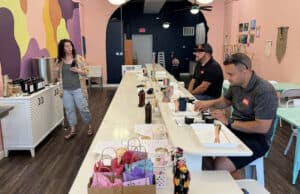
    Ever wanted to pour your own candle? Now you can right here in Downtown Bellefontaine! Triple Moon Designs in Bellefontaine, Ohio, recently added a new and exciting candle bar, offering a unique experience not typically seen in small towns. My team has had the chance to try it out and they’re raving about it. Owner Jessica Epley has curated the best-smelling and cleanest scents, as well as some of the nicest vessels that range from only $20-$35.

    In a colorful room, a woman is offering instructions to two men seated at a craft table, preparing to pour their own candles.

    Candle making as a business gets a new spin in this “candle bar” where customers can design and make their own candles. Triple Moon Designs in Bellefontaine, Ohio. Photo courtesy of Small Nation.

    Plus, if you like your created scent, Jessica can re-create it for you to make for the perfect Christmas or new client gift!

    How Candle Making Creates an Economic Ripple Effect

    Jessica’s new candle bar is a perfect example of the kind of destination-type experience that brings vitality and vibrancy to our community. Creating these unique experiences in a small town setting holds immense value. They draw both locals and visitors. The candle bar isn’t just about making candles; it’s about the experience of creativity and personalization. Visitors have the opportunity to craft something uniquely

  • Create customer experiences online like Open the Shop With Me videos, and in person, like Silent Book Club

    Create customer experiences online like Open the Shop With Me videos, and in person, like Silent Book Club

    When Kathleen Minogue of Crowdfund Better mentioned Common Ground Coffee and Market to me, I found their Instagram feed was full of stealable ideas for small business social media marketing. We first talked about how they let customers know about changes to their hours. They’re in Boise, Idaho, which I realize is not a small […]

    When Kathleen Minogue of Crowdfund Better mentioned Common Ground Coffee and Market to me, I found their Instagram feed was full of stealable ideas for small business social media marketing.

    We first talked about how they let customers know about changes to their hours.

    They’re in Boise, Idaho, which I realize is not a small town. I promise I wouldn’t share ideas unless they also worked for small town businesses.

    These ideas are perfect for coffee shops, gaming businesses and other third places where people gather and hang out.

    Any small town business could copy their “Open the shop with me” video, or their post of staff members as a group.

    A screenshot of the Common Ground Coffee and Market Instagram feed, showing four images, a group of people with valentine hearts, a group of staff members, one person facing the camera for an explainer video, and one video with text that says "open the shop with me"

    Steal this idea: do an “open the shop with me” video! Image from Common Ground Coffee and Market, Boise, Idaho, Instagram.

    Partner with other groups and businesses, even in small ways.

    You don’t have to come up with, organize and then staff every event. Start looking for other clubs, groups, people and other businesses you can partner with. What do people like to do in your town, for fun or activities? Try tapping into those folks to help create experiences inside your business.

  • Will trendy axe throwing and escape room businesses last? More experience-based retail: the Hat Bar

    Will trendy axe throwing and escape room businesses last? More experience-based retail: the Hat Bar

    Continuing the discussion on experience-based businesses, what happens after everyone in town tries it? Do these businesses go away? Sheila Scarborough posed the question this way: How do all these axe-throwing and escape room places think they’re going to stay in business past a few years? Main Street Expert Jackie Wolven weighed in: In a […]

    Continuing the discussion on experience-based businesses, what happens after everyone in town tries it? Do these businesses go away?

    Sheila Scarborough posed the question this way:

    How do all these axe-throwing and escape room places think they’re going to stay in business past a few years?

    Main Street Expert Jackie Wolven weighed in:

    In a tourist community they might be ok if they keep it fresh. But like any small biz, if they aren’t making money they will close and move onto something else.

    I was also thinking with the current popularity of shows like Game of Thrones, Last Kingdom and Outlander… the axe throwing probably is a cultural phenomenon. And the true crime fandom is just as rabid which might be driving escape rooms.


    The Hat Bar: customize your own hat

    We’ve talked before about the candle bar in Bellefontaine, Ohio.

    A fashionably singed felt cowboy hat decorated with a turquoise-studded hat band, with feathers and playing cards in a poker hand giving it a rustic western look.

    Get your own custom western hat in Caldwell, Kansas. Photo via Rustic Longhorn Co facebook page.

    In Caldwell, Kansas, there’s a retail business called Rustic Longhorn Co. that features a hat bar. I had to ask what a “hat bar” even was. They sell hats you can customize on site. Pick a cowboy hat or trucker cap. Pick your hat band, patches or other decorations. Assemble your personalized hat right there in the

  • From Finance to Creativity: A Journey to Building an Experience-Based Business in Bellefontaine

    From Finance to Creativity: A Journey to Building an Experience-Based Business in Bellefontaine

    In today’s fast-paced world, many individuals find themselves stuck in careers that fail to ignite their passions. For some, the journey to rediscovering creativity can lead to unexpected and fulfilling paths. This is the story of one such entrepreneur who transitioned from a corporate finance job to creating a vibrant experience-based business in downtown Bellefontaine. […]

    In today’s fast-paced world, many individuals find themselves stuck in careers that fail to ignite their passions. For some, the journey to rediscovering creativity can lead to unexpected and fulfilling paths. This is the story of one such entrepreneur who transitioned from a corporate finance job to creating a vibrant experience-based business in downtown Bellefontaine. Through her journey, Jessica Epley not only embraced her artistic side but also built a community hub that fosters creativity and memorable experiences for all who visit.

    Take small steps: craft shows and teaching classes

    After college, Jessica ventured into the finance sector, but the reality of staring at Excel spreadsheets for eight hours a day quickly made her realize that this path wasn’t for her. Fortunately, she was in a position to leave that job and take some time to rediscover her passions.

    Once Jessica stepped away from the corporate grind, it felt like a fog had lifted. She began to explore her artistic side, diving into painting and macramé. This newfound creativity led her to travel around, setting up at craft shows and markets to showcase her work. Eventually, she transitioned from being a vendor to teaching classes across the state, sharing her love for creativity and crafting with others. She discovered her true passion lies in providing people with memorable experiences that they can cherish forever.

    Stepping up to a downtown space

    Then a small space became available in downtown Bellefontaine. Tired of the constant setup and teardown of market events, Jessica decided to take a leap a